N S E W
Offshore Leadership Coaching

The
Skipper
Method

Because real leadership
has no autopilot.

A framework forged at sea and sharpened across twelve years of coaching technology teams from Berlin to Tel Aviv. Five principles. One boat. One of the most honest leadership environments you will ever enter.

Scroll
"The sea doesn't care about your title.
Only your judgement."

Most corporate offsites have the same problem. You fly somewhere nice, sit in a conference room with a better view, watch a facilitator with a flip chart, eat well, and fly home. Six months later nobody can remember what was decided or why it mattered. The environment was too safe. People performed instead of revealing themselves.

Genuine change requires genuine challenge. Not manufactured exercises. Not trust falls. An environment where real decisions carry real consequences — and a skilled coach present to help you understand what you are learning while you are still in it.

A sailing yacht is that environment. You cannot hide. You cannot leave early. The group is operating together for five days — real wind, real navigation, real challenges, real consequences. Every leadership pattern you have built surfaces within forty-eight hours. The boat makes it impossible to pretend otherwise.

The Skipper Method was built from the intersection of two worlds: years of Agile leadership coaching across Germany, Israel and Ukraine, and the hard-won lessons of sailing the Mediterranean. Every principle has been tested in organisations and at sea. The framework works because both environments demand the same thing: honest leadership under pressure.

Five Principles

Each principle emerges from the same truth: how you lead on a boat is exactly how you lead in your organisation. The boat simply makes it impossible to pretend otherwise.

01 Navigate,
don't control
+
Navigate, don't control — The Skipper Method
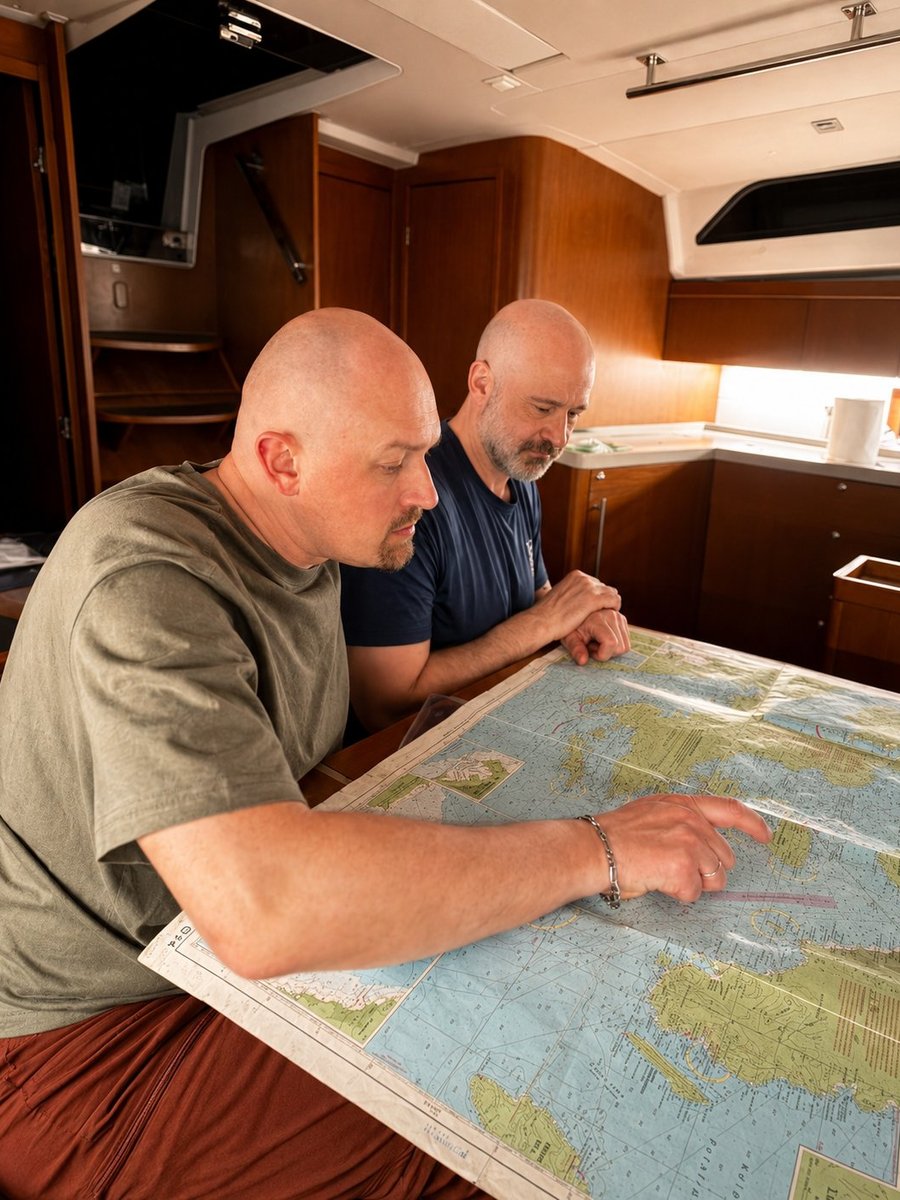
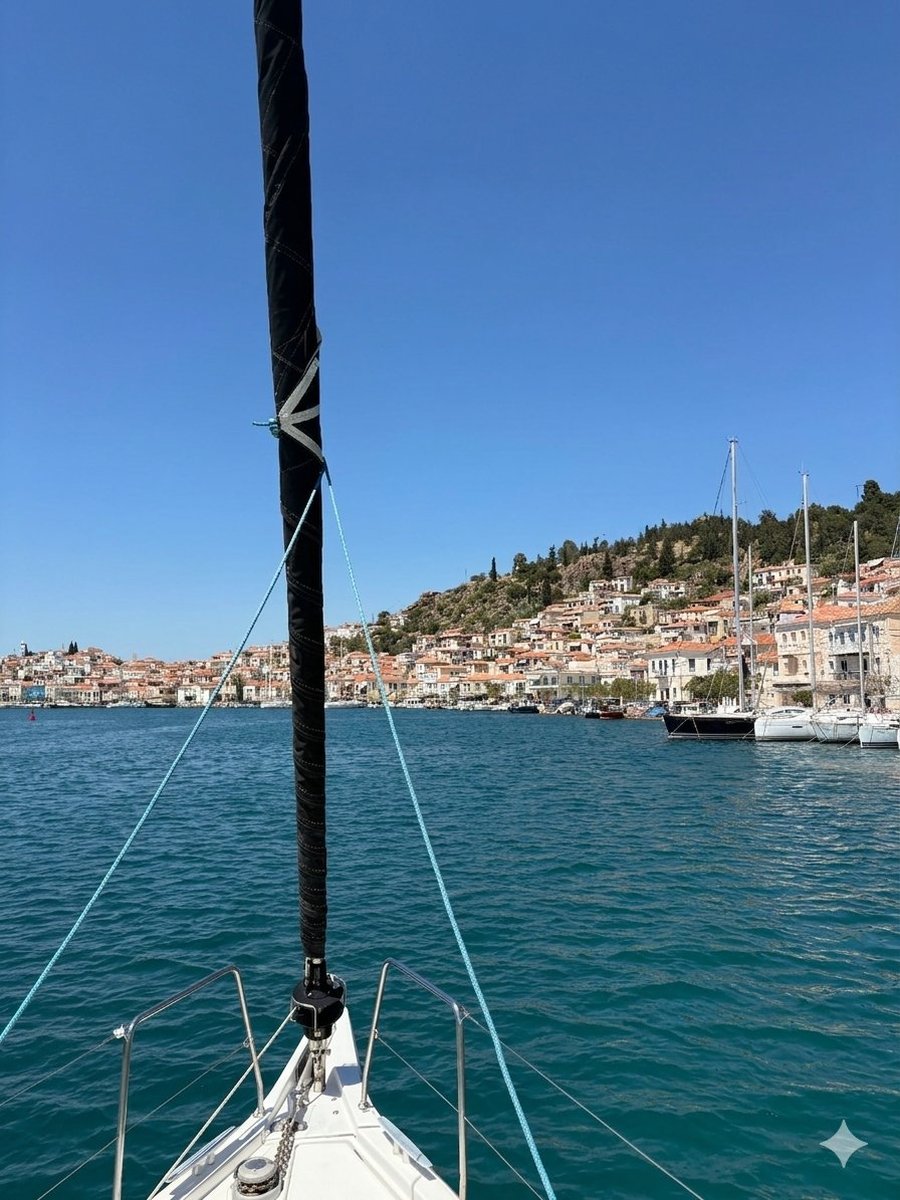
Navigation planning — The Skipper Method
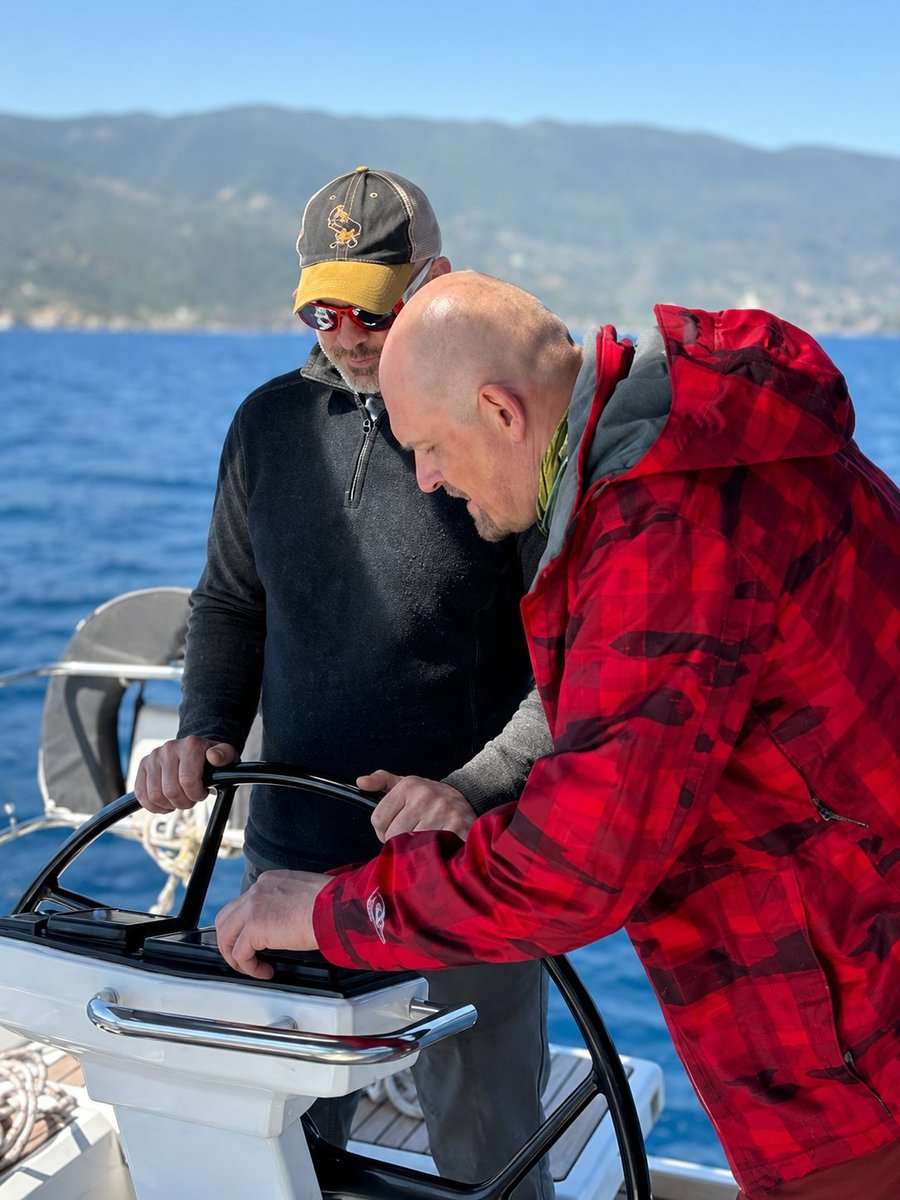
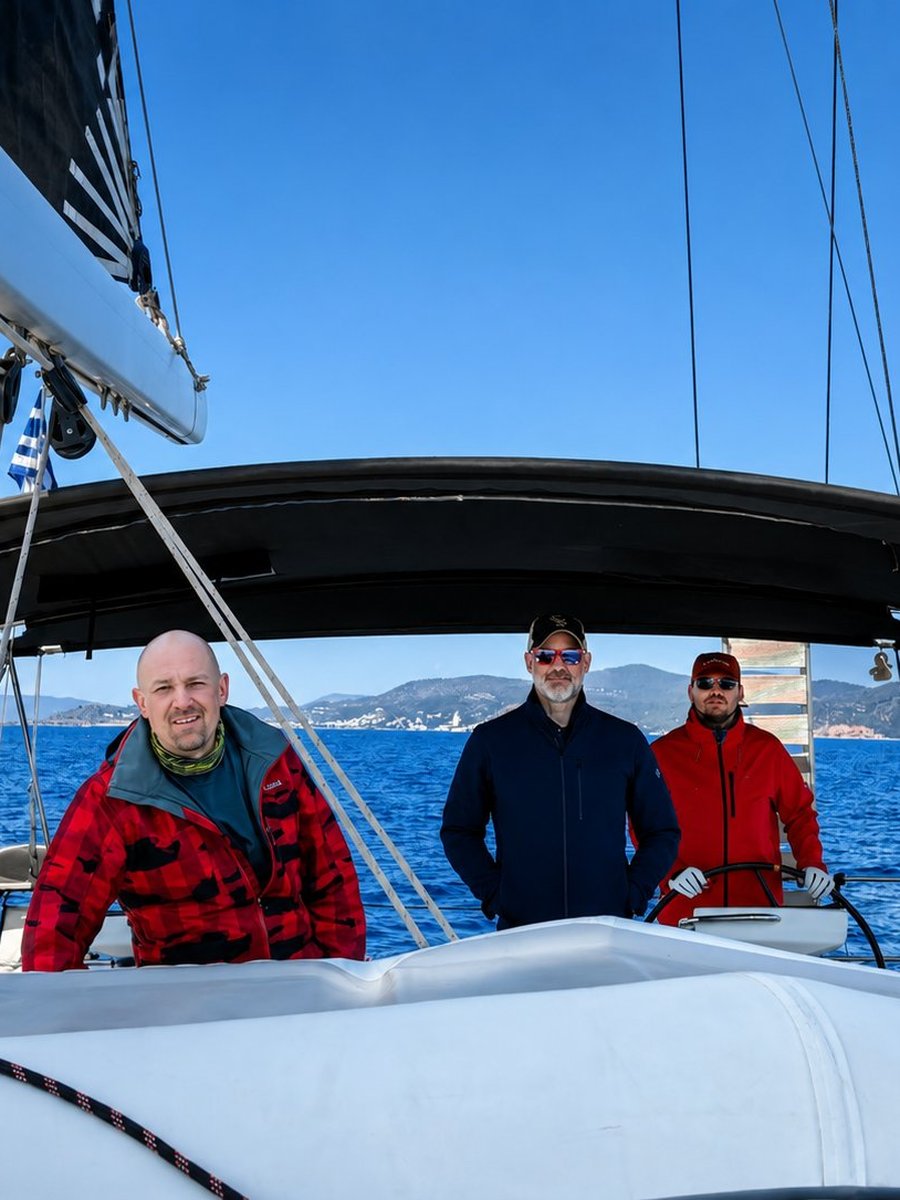
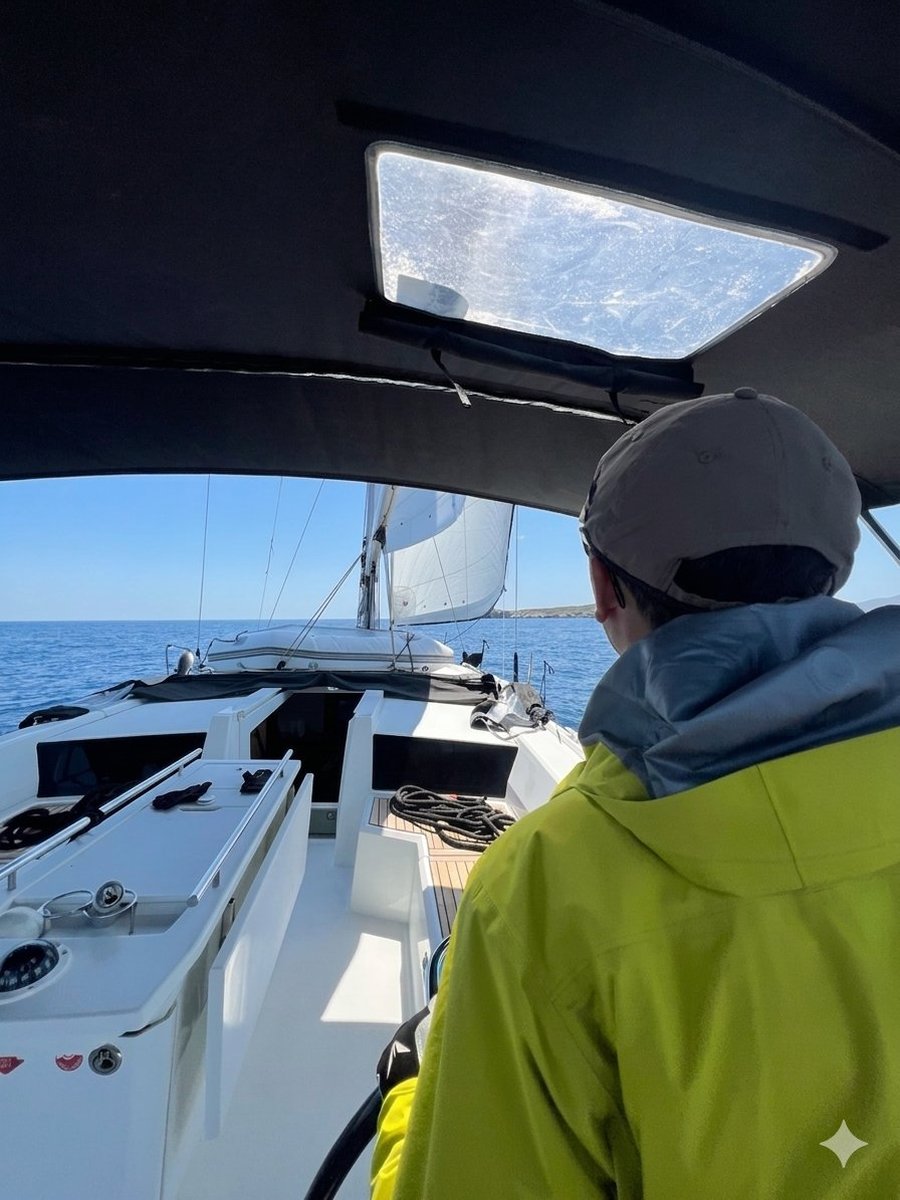
At the helm — The Skipper Method
01

Navigate,
don't control

Reading the Wind · Adaptive Helmsmanship

A skipper reads conditions and adjusts — constantly. They do not fight the wind; they work with it. Leaders who try to control outcomes instead of navigating them exhaust their crew, miss the wind, and eventually capsize.

In practice: This principle builds adaptive decision-making. Participants experience firsthand what it costs to impose a plan on changing conditions — and what becomes possible when they let go of control and navigate instead.

02 The helm
is shared
+
The helm is shared — The Skipper Method
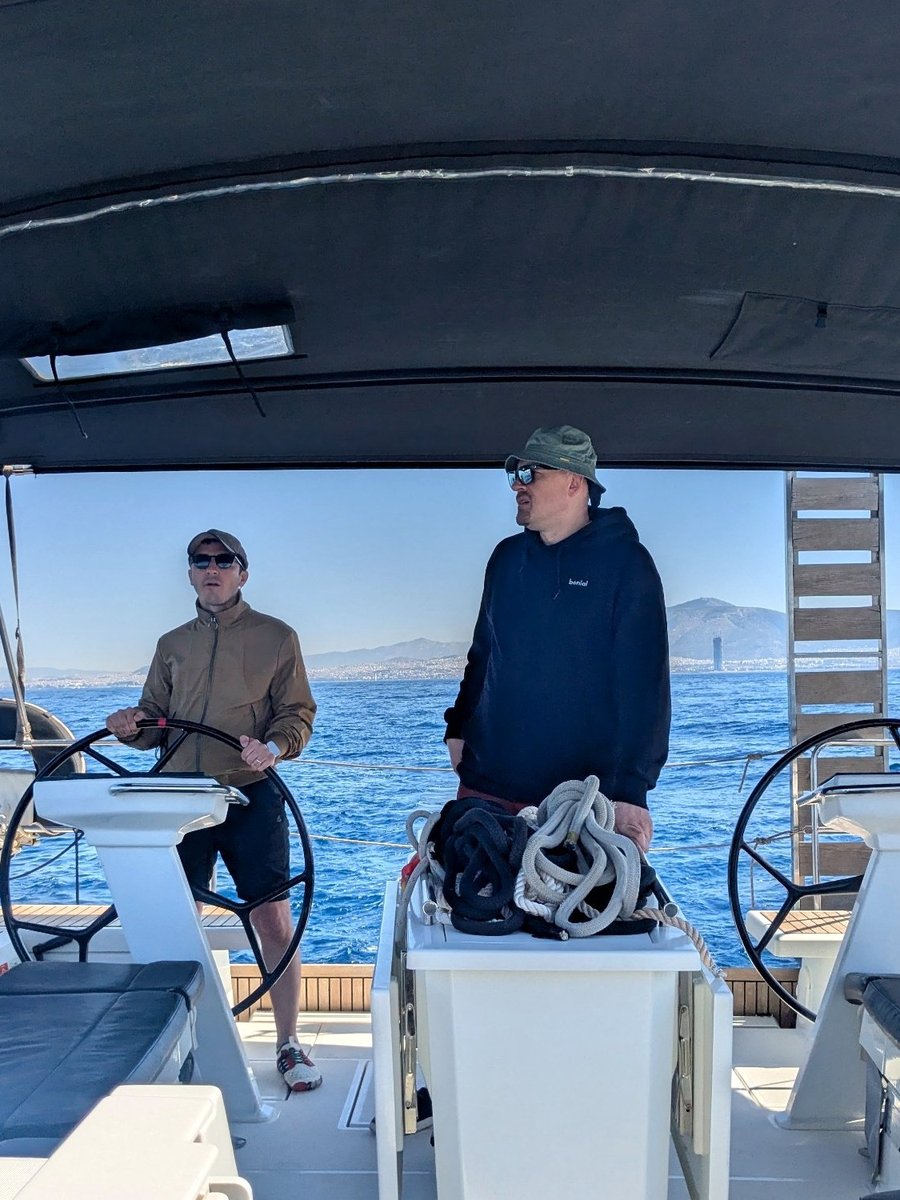
Crew on deck — The Skipper Method
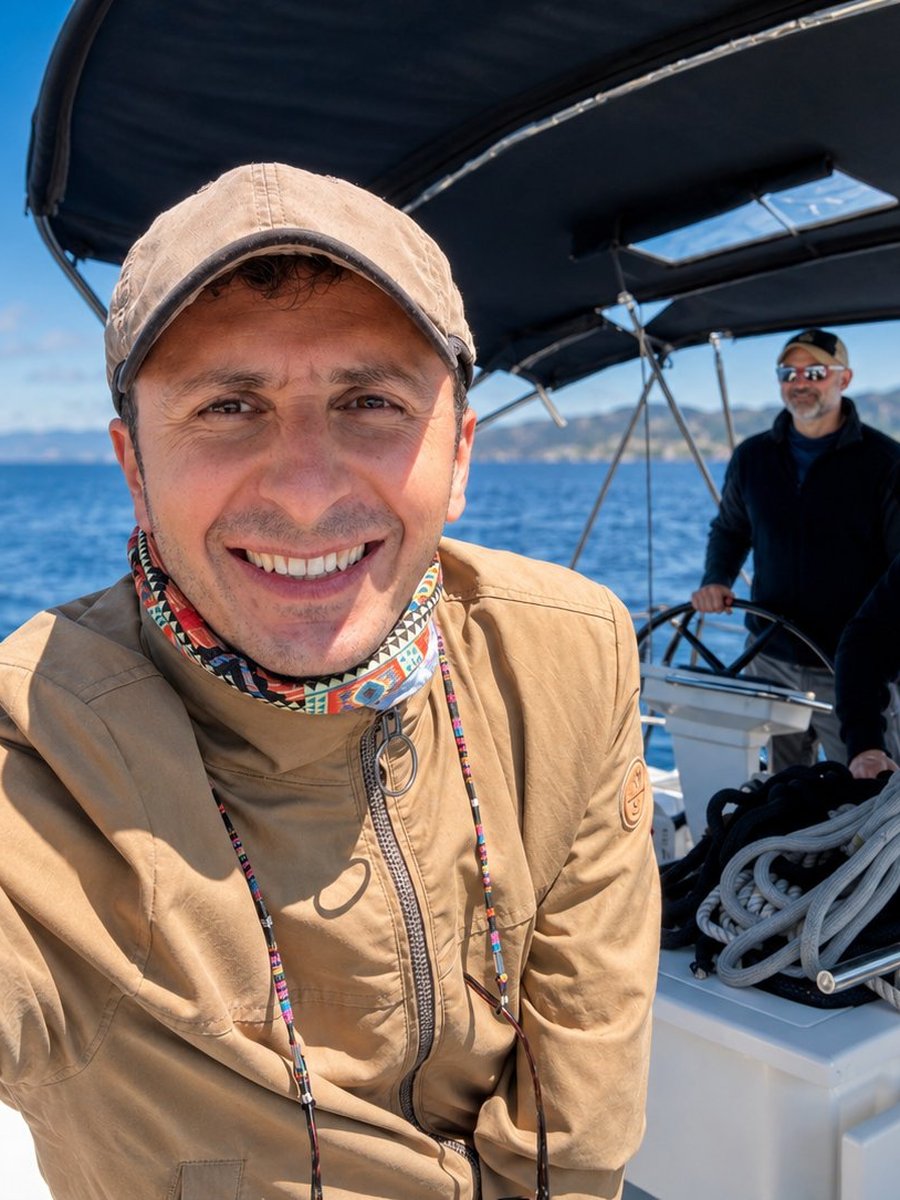
Crew smiling — The Skipper Method
02

The helm
is shared

Watch Rotations · Crew Empowerment

The best skippers give the helm away — deliberately, repeatedly, even when it's uncomfortable. Leadership development only happens when others make real decisions with real consequences. A crew learns by steering, not by watching someone steer.

In practice: Every participant takes the helm. A junior developer who can sail holds the same authority as a CTO who cannot. The boat collapses artificial hierarchy and reveals who actually leads when the title is irrelevant.

03 Weather ignores
your plan
+
Weather ignores your plan — The Skipper Method
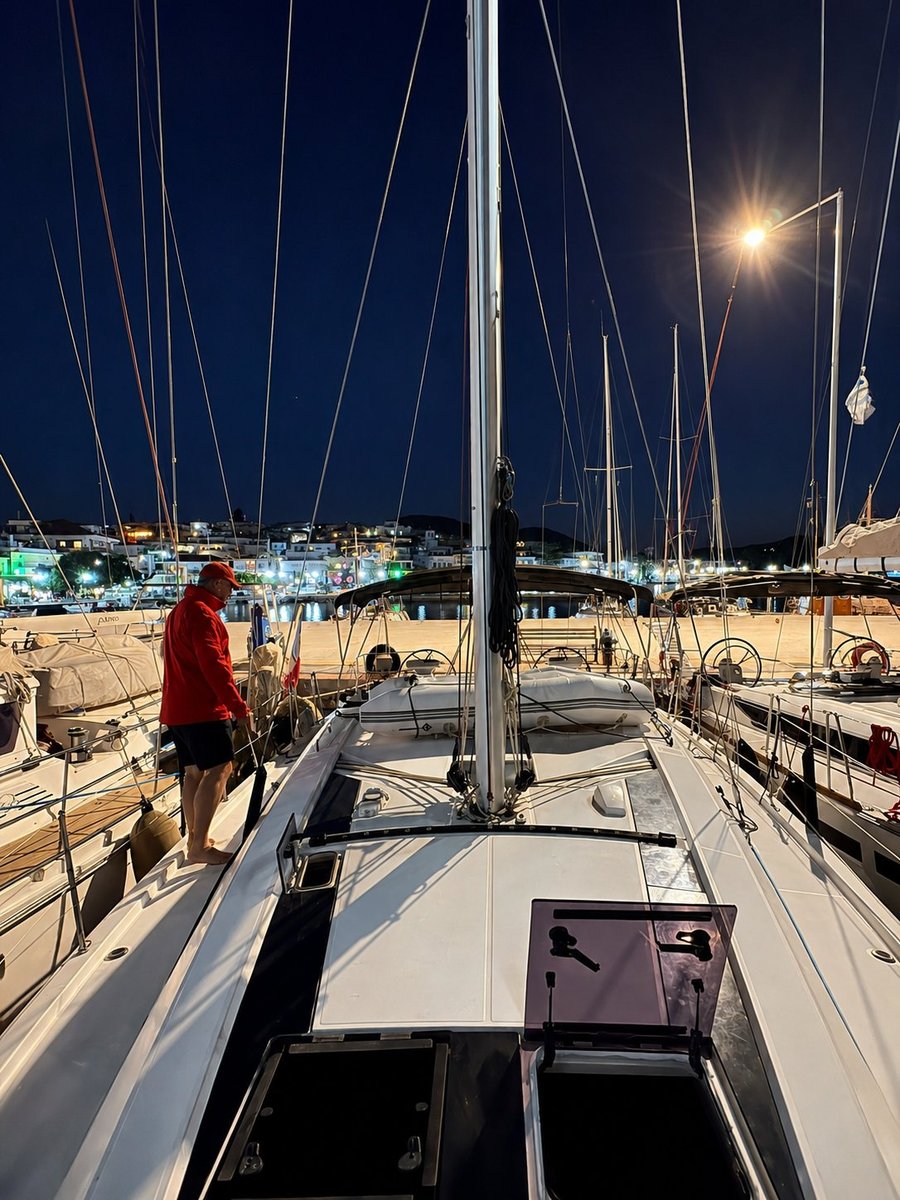
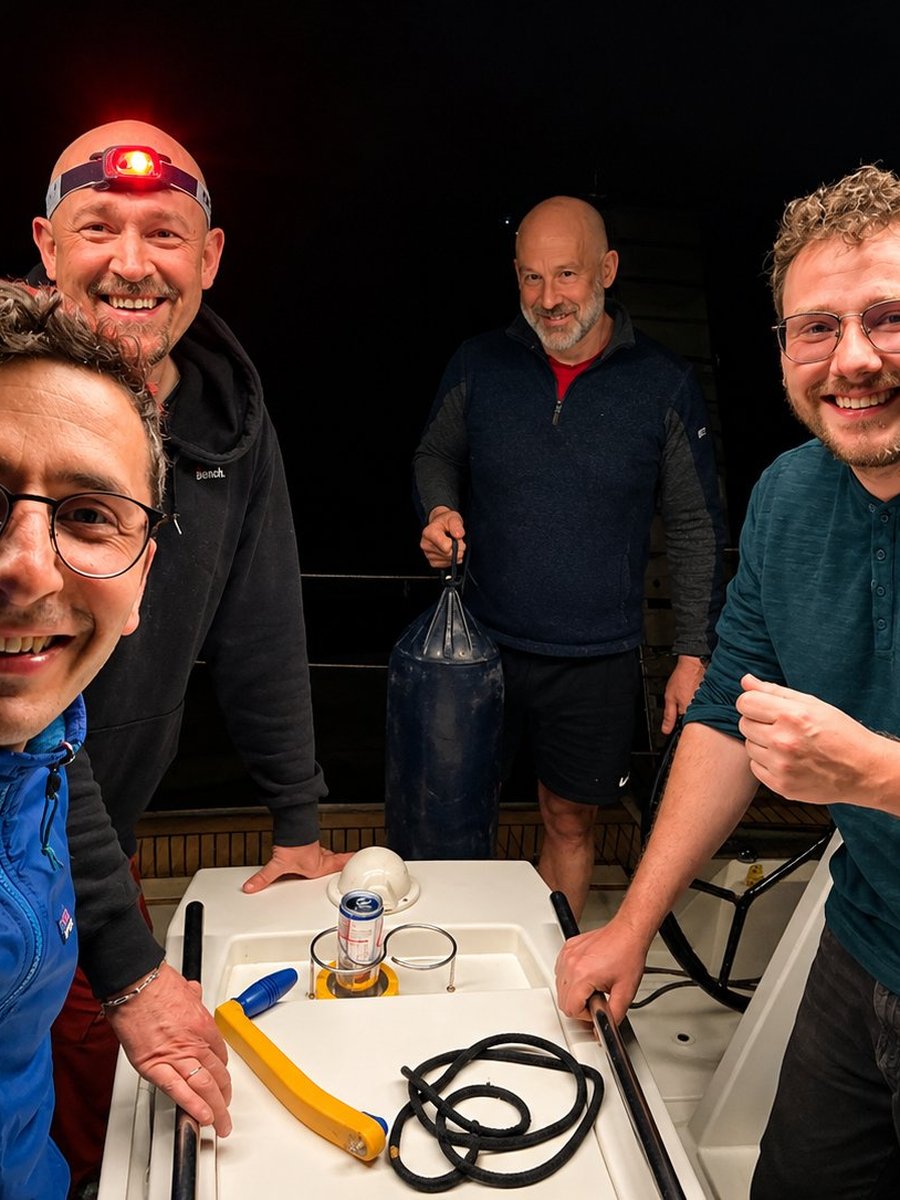
Night marina — The Skipper Method
Incident solved — The Skipper Method
03

Weather ignores
your plan

Storm Protocols · Decision Under Uncertainty

Adaptability is not a soft skill. At sea, it is a survival and safety skill. How you respond when conditions change at 2am, thirty miles from the nearest harbour — that is who you are as a leader. Not who you are when the agenda holds.

In practice: The Passage includes at least one genuine pressure moment — a course change, a night sail, a weather decision. No simulation. No debrief before the decision. Real stakes, processed afterwards with full coaching support.

04 Silence sinks
ships
+
Silence sinks ships — The Skipper Method
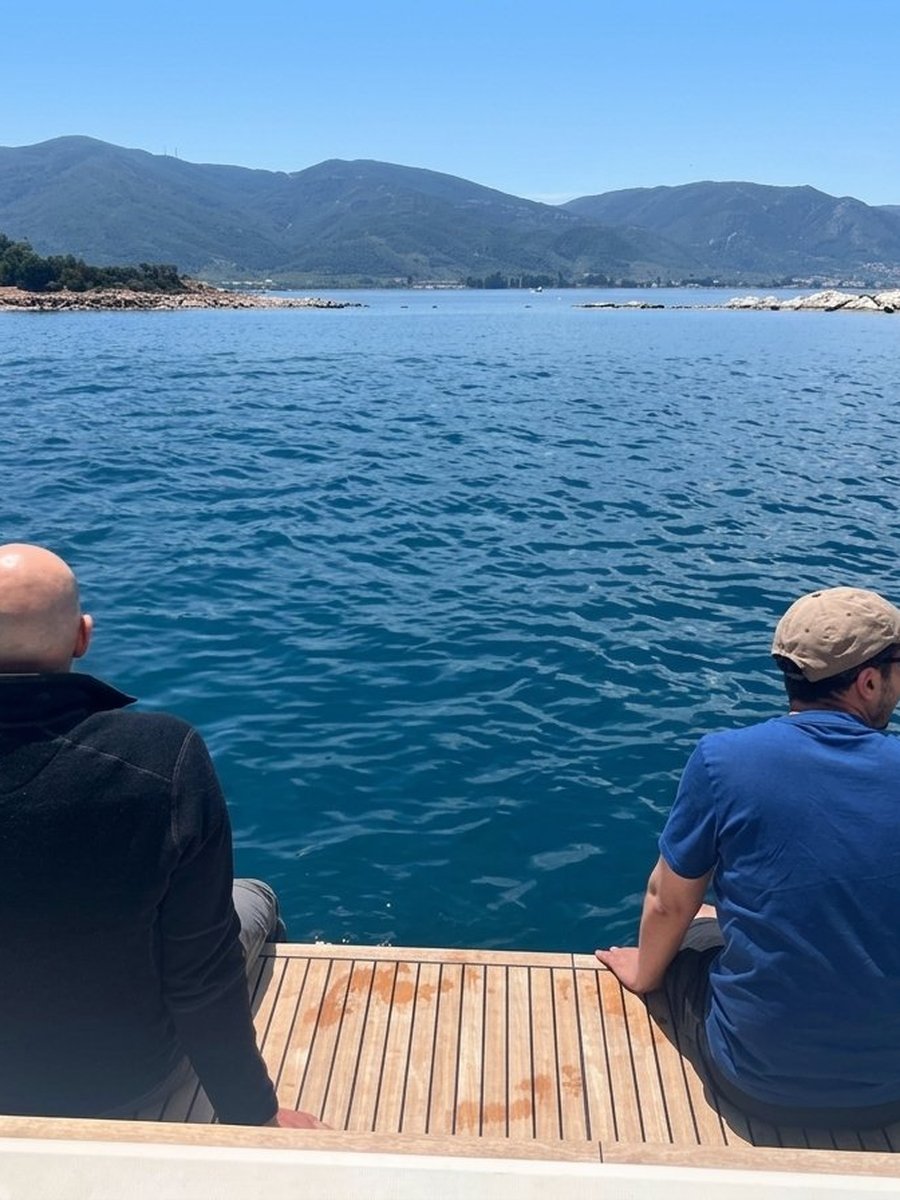
Reflection at sea — The Skipper Method
Quiet on deck — The Skipper Method
04

Silence sinks
ships

Crew Voice Protocols · Psychological Safety

A crew that won't speak up about danger will sink the boat. This is seamanship, not philosophy. The same is true for teams that won't surface problems, challenge decisions, or admit they don't know something. Psychological safety is not a cultural nicety — it is an operational requirement.

In practice: The passage is designed to surface silence. The closed environment, the shared risk, and Anton's facilitation create the conditions where people say things they have never said in an office. That openness travels back home.

05 The destination
is a direction
+
The destination is a direction — The Skipper Method
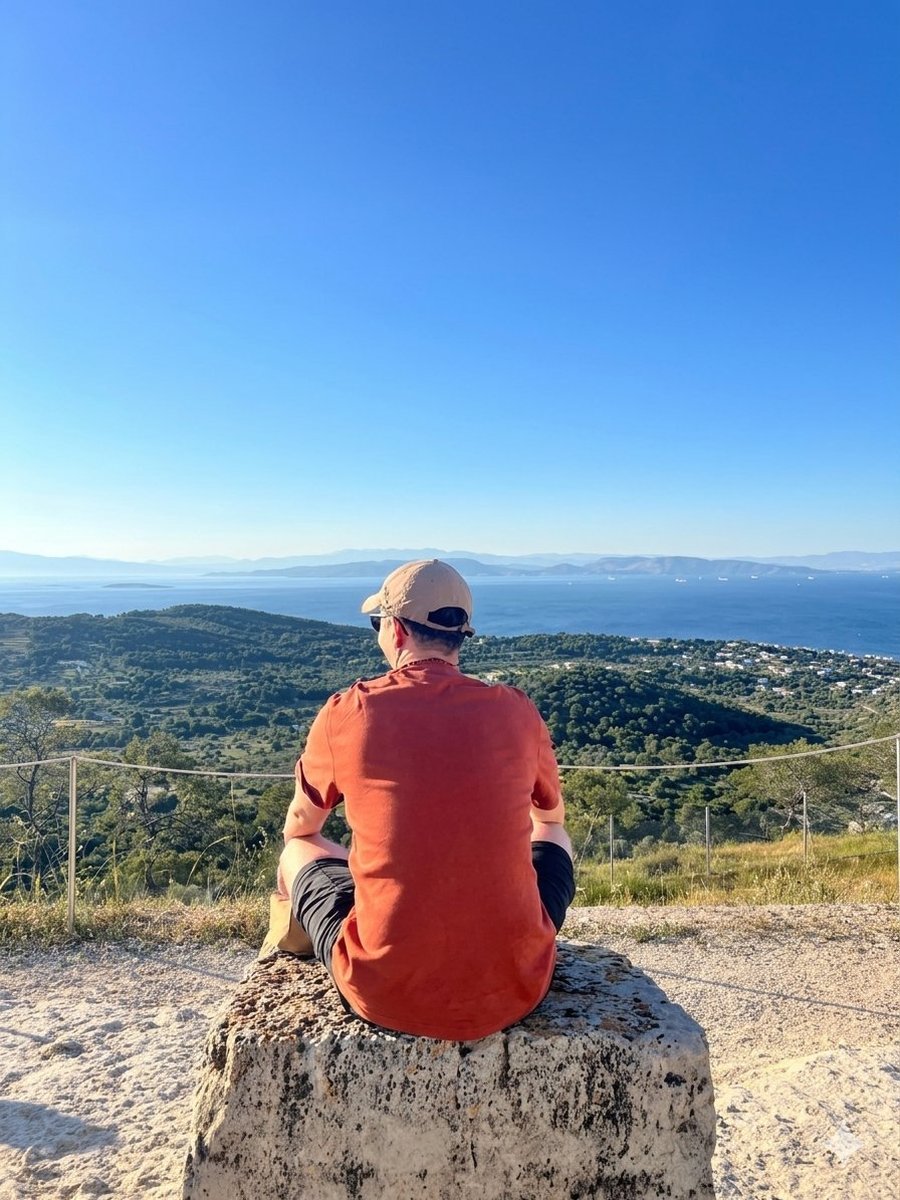
Arriving — The Skipper Method
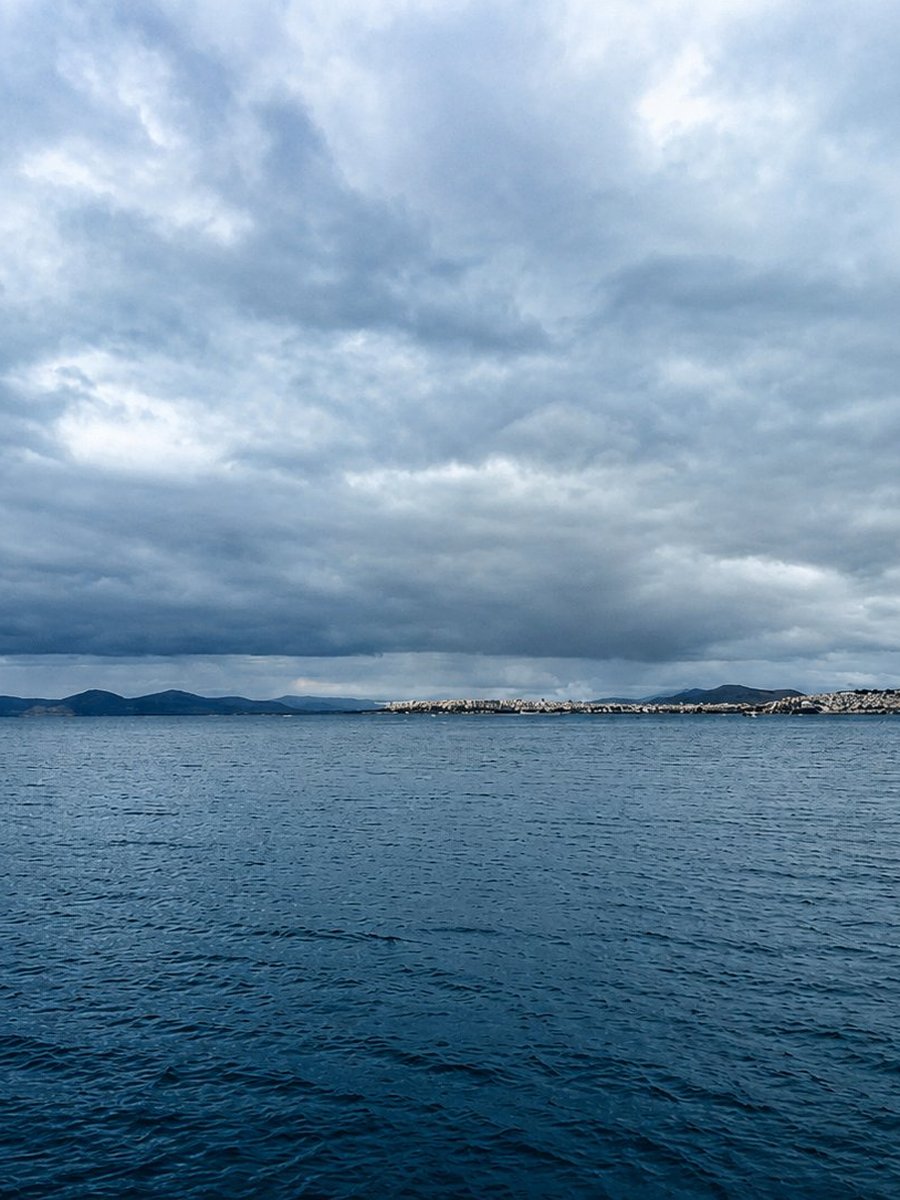
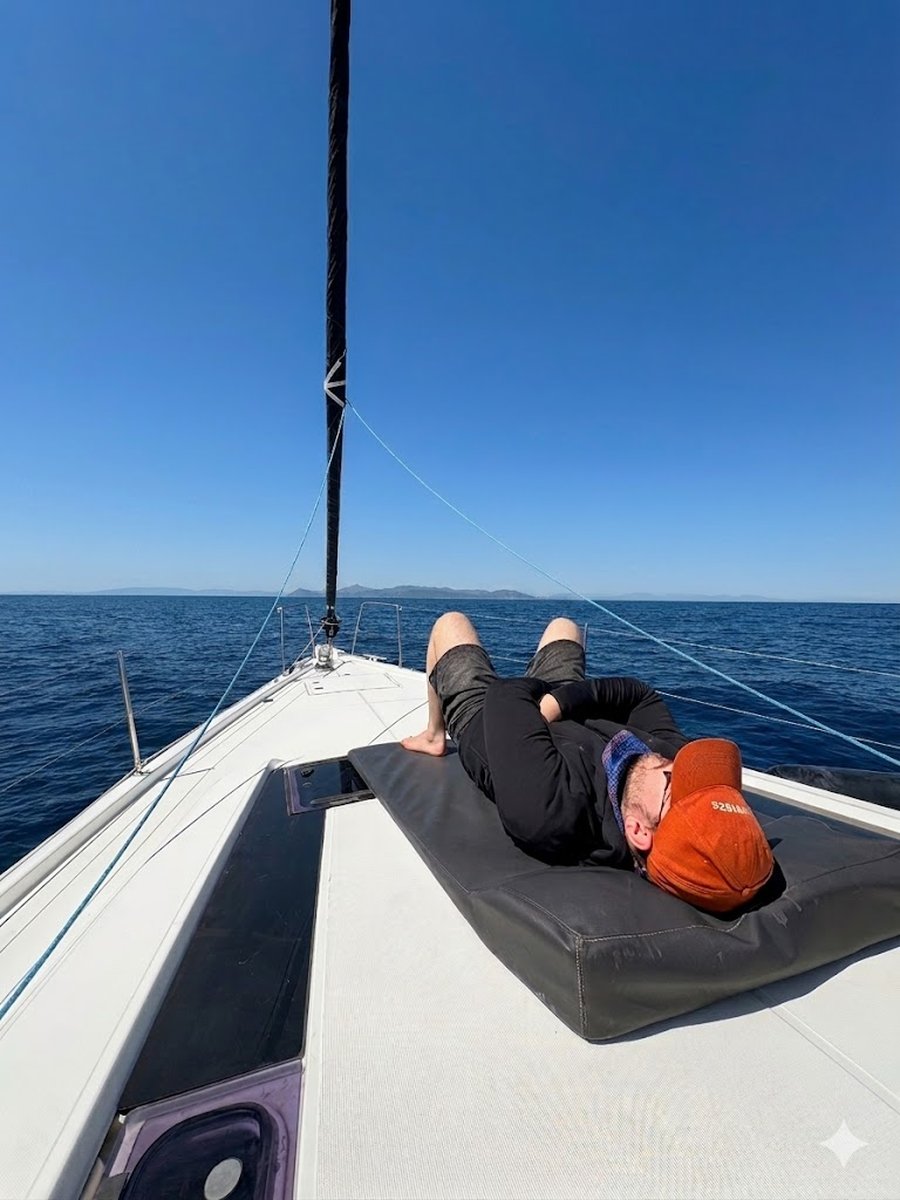
Heading out — The Skipper Method
05

The destination
is a direction

Waypoints · Long-Haul Navigation

You set the heading. A GPS point is not a strategy — it is a coordinate. Skippers know that the route changes as conditions reveal themselves — and that what arrival means changes too, even when the harbour does not. Goals set direction. Adaptability determines arrival.

In practice: The final evening is a commitment session. Each participant articulates one directional change — not a SMART goal, but a heading. Something that will still be true in a year, even if the specific path shifts.
What people say
when they step ashore.

Words from the crew.

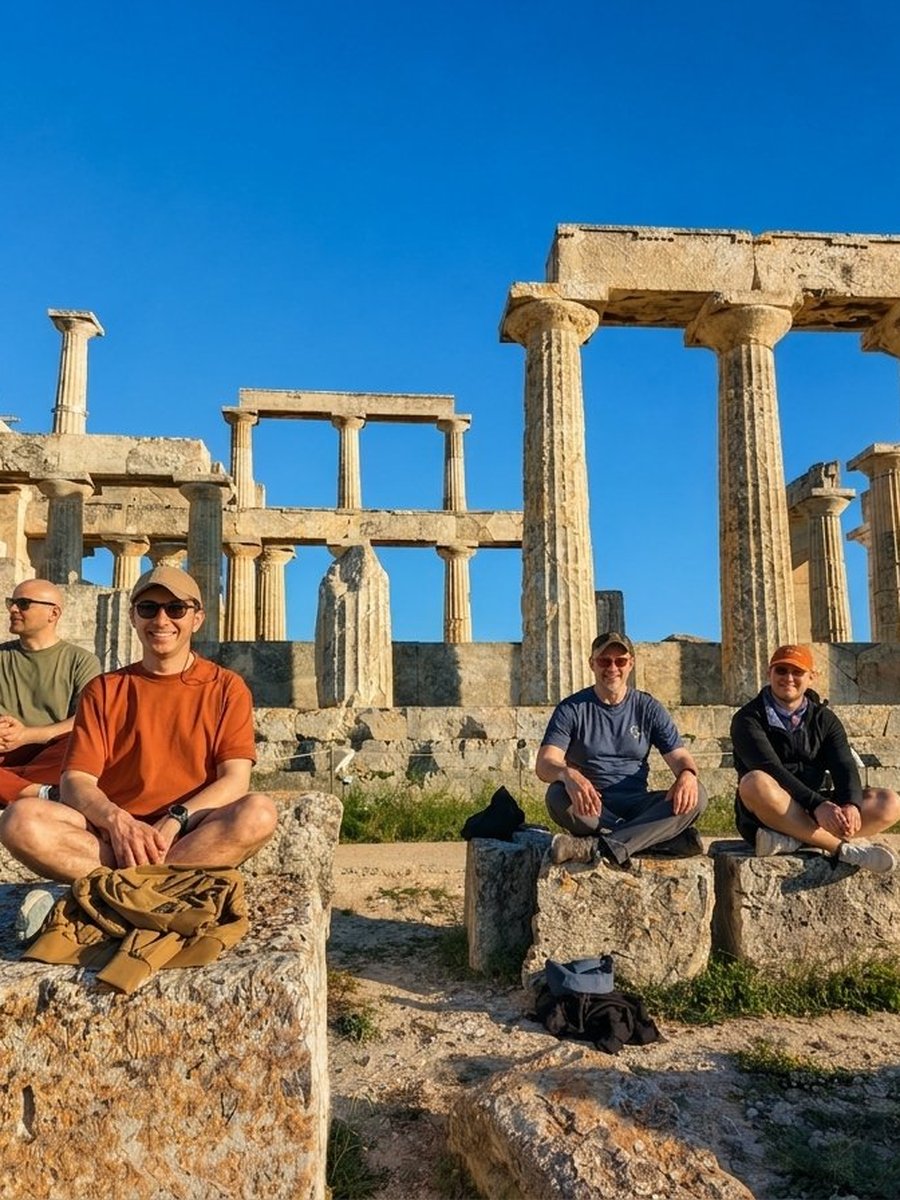
"I wasn't sure what to expect from 5 days at sea or how life on a boat would feel. The experience was incredibly great. Moving between islands felt like a total escape and Anton was a great captain who made us all feel at ease. Even when we weren't under sail, the feeling of being on the water and exploring new spots was therapeutic. I felt completely recharged. We collected incredible memories and I left with a genuine appreciation for the boat life."

— Fevzi K.
Head of Engineering · Berlin
April 2026

"I joined Anton's sailing trip with excitement and an open mind. As someone with boating experience, I was mainly looking forward to time on the water, good company, and a change of scenery. Anton's calm and confident way of handling the boat stood out right away. Even in Greece, where sailing can sometimes feel hectic, he created a relaxed and safe atmosphere. That made it easy to switch off, enjoy the trip, and connect with the people on board. The conversations about work, technology, and teamwork came naturally and never felt forced. Being on a boat together created an open atmosphere where you get to know people in a different way. Afterwards, I was simply glad I went. I left with good memories, new perspectives, and real appreciation for Anton as a sailor and host."

— Patrick M.
Manager · Potsdam
April 2026

The people who belong
on this boat.

We are selective about who joins. Not because the passage is exclusive for its own sake — but because the experience only works when every person in it is genuinely ready for it.

This is for you
  • Your team is strong experts but struggling to have honest conversations — in retrospectives, in 1:1s, or when things go wrong
  • You are a founder or senior leader who has attended offsites before and found them forgettable — and want something that actually changes behaviour
  • You lead a distributed or cross-cultural team where trust is difficult to build through a screen
  • You've assembled a new leadership team and want to build their shared foundation deliberately, not over months of meetings.
  • You want your team to reference this experience in five years, not forget it in five weeks
  • You are willing to be uncomfortable in service of growth — both yours and your team's
×
This is not for you
  • You want a cruise — service, comfort, and cocktails with umbrellas. There are excellent companies for that. We are not one of them.
  • You need a passive conference format — presentations, panels, and PowerPoint decks
  • You want a facilitator who never challenges the leader in the room — this passage will hold everyone accountable, including you
  • You have significant medical contraindications to sailing or open water
  • You want to observe the group dynamic rather than be part of it — this passage has no observer role, only crew
The Skipper
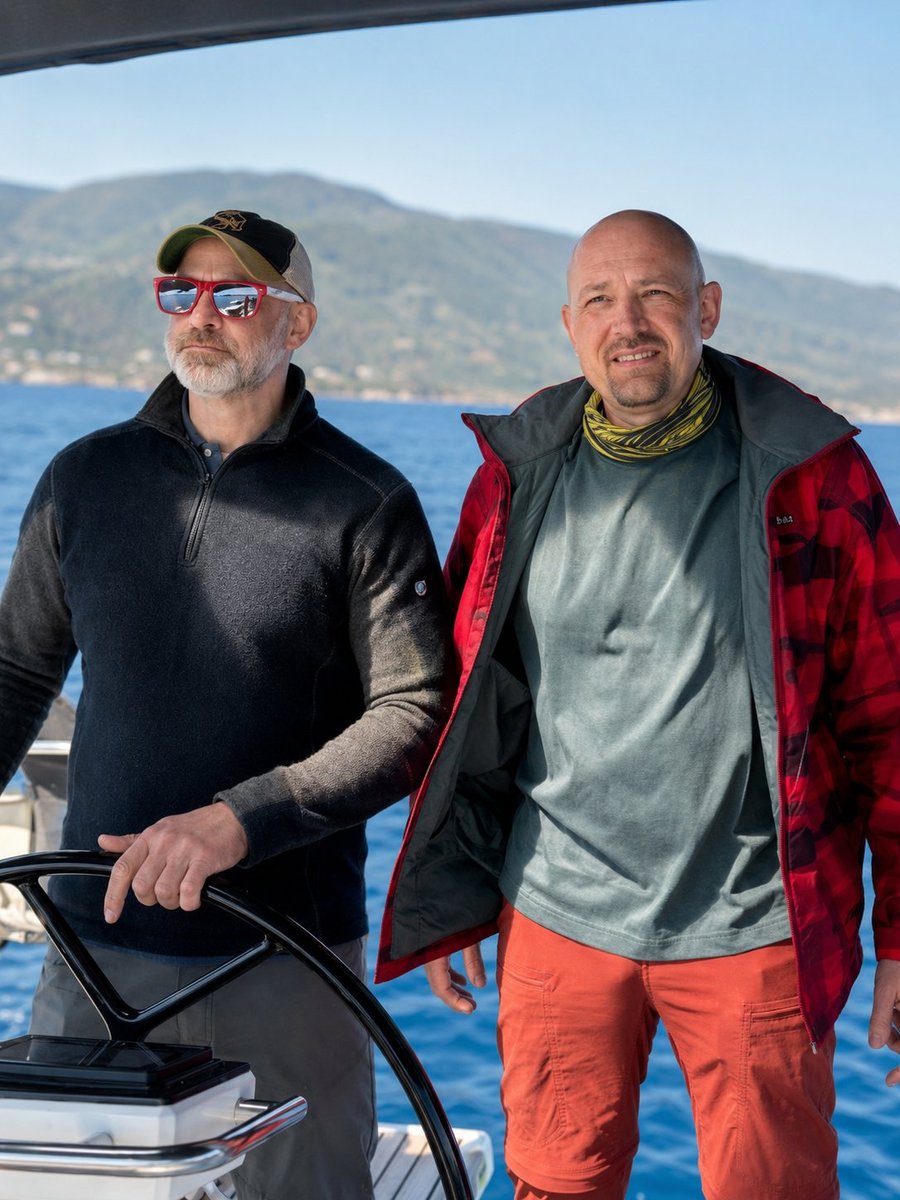
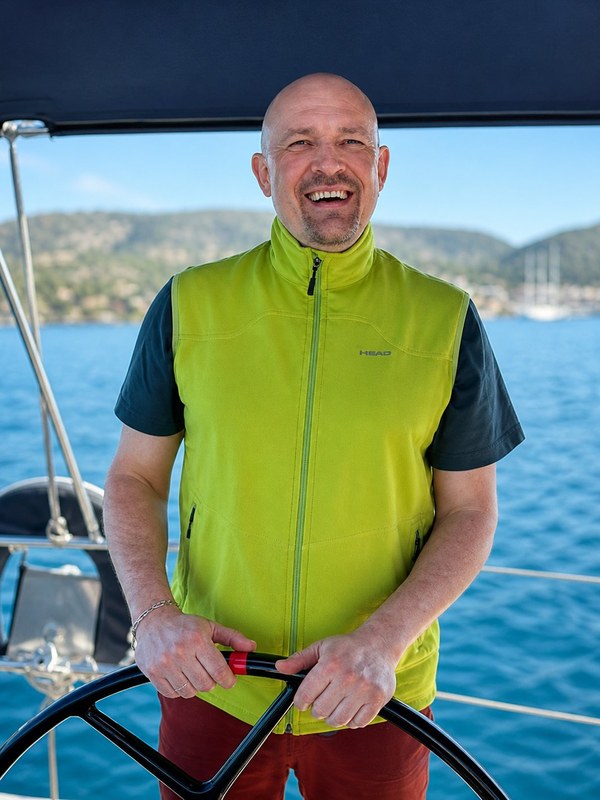
Anton Gedenach at the helm — The Skipper Method
ISSA Certified Skipper
12+ years Agile Leadership Coaching
Germany · Israel · Ukraine
Founder, ScalingCrew.com
Based in Berlin

Two skills.
One unusual combination.

Most leadership coaches have never held a tiller under pressure. Most skippers have never coached a team through a hard merger, a misaligned leadership team, or the months when no one wants to say what everyone is thinking. I did both — and built a framework from the intersection.

Over twelve years working with tech teams across Germany, Israel and Ukraine, one pattern emerged consistently: the leaders who struggled most were not lacking intelligence or strategy. They were lacking the experience of genuine pressure without escape routes. The sea provides that in a way no meeting room ever can.

Every passage facilitated and organized personally — which means you are not buying a programme delivered by a stranger. You are sailing with the person who built the method.

I lived in Ukraine, Israel and Germany — and understand the specific cultural dynamics of each. This matters more than it sounds on a boat where there is nowhere to retreat to politeness.

Five Days at Sea

Leadership development that your team will still be talking about in five years. Because it actually happened to them.

The Environment

A 51-foot sailing yacht in the Mediterranean. Up to 5 participants. No hotel rooms to hide in. No lobby to drift away to. Five days of complete immersion in one of the most honest leadership environments on earth.

N
The Curriculum

Each day maps a principle of The Skipper Method onto a real nautical experience. Morning sessions are structured. Afternoons are experiential. Evenings are when the real conversations happen — at anchor, with nowhere else to be.

The Facilitation

Anton facilitates every session. Psychological safety assessments before and after. Individual 1:1 coaching during sailing. Group debriefs at anchor. Written commitments on the final evening that you carry home.

5
Days at Sea
5
Participants Max
Retreats per Season
Med
Location

Five Days. Five Principles.

Day 01
Navigate, Don't Control

Departure. The boat assigns roles the title cannot protect. Open water, real wind, no agenda. Evening anchor debrief: where did you try to control what you could only navigate?

Day 02
The Helm Is Shared

Every participant skippers a passage. Authority shifts. Expertise becomes irrelevant. 1:1 coaching while underway: who are you when the wheel is yours — and who are you when you hand it over?

Day 03
Weather Ignores Your Plan

Conditions change. The plan doesn't survive. A real navigational decision with real consequences — no simulation, no preview. Structured debrief: how do you lead when you can't know enough?

Day 04
Silence Sinks Ships

Five days in, the boat has stripped the politeness. Crew voice session at anchor: what hasn't been said? What cost has the silence carried? The conversations that don't happen in offices happen here.

Day 05
The Destination Is a Direction

The return passage. One heading each. Not a SMART goal — a direction. Written before you step ashore. The question that stays with you: what changes on Monday morning?

The passage is five days.
The method continues.

Most offsites end when the bus arrives at the airport. The Skipper Method is designed to keep working after you leave the boat — because insight without structure disappears within weeks.

Every participant leaves with written commitments they set themselves on the final evening — not goals assigned by a facilitator, but headings they chose under their own authority. Thirty days later, Anton follows up personally to check the heading is holding.

For teams that want to deepen the work, ongoing coaching is available through the same methodology, applied to your day-to-day context across a three-month engagement.

And the people you sailed with become part of something that continues beyond the retreat. The Scaling Crew alumni network connects leaders who have shared the same experience — people who have seen each other lead under genuine pressure, not just over dinner.

Personal Leadership Report
A written debrief from Anton on what he observed about your leadership across the five days — patterns, moments, and one specific recommendation.
Pre & Post Safety Scores
Psychological safety measured before and after the passage. Concrete data you can take to your leadership team or board.
Written Commitments
Each participant's heading — set on the final evening. One directional change per person, revisited at the 30-day check-in.
30-Day Check-In Call
A 45-minute call with Anton one month after the passage. What has shifted. What hasn't. What support would help. Included for all participants at no extra cost.
Alumni Network Access
Permanent access to the alumni network — a community of leaders who have sailed together. Annual reunion expeditions, peer coaching, and a private channel to stay connected.

Transparent
pricing.

No pricing on request. No hidden fees. If you need to ask whether you can afford it, you probably already know the answer. Here is what it costs and exactly what that covers.

Individual Place
€3,000
per person · ±5 places per passage
  • 5 nights aboard a 51-foot sailing yacht
  • Basic provisions on board
  • Full facilitation by Anton across all 5 days
  • Pre-passage psychological safety assessment
  • Post-passage personal leadership report
  • Written commitments document
  • 30-day follow-up coaching call
  • Alumni network access
Not included
  • Flights to marina city
  • Travel to and from marina
  • Personal travel insurance
  • Dining on shore
Corporate Team Booking
€15,000
whole boat · ±5 participants
  • Exclusive use of the yacht for your team
  • Custom curriculum designed around your specific team challenges
  • Pre-passage team diagnostic and individual intake calls
  • Everything included in the individual rate, for all participants
  • Post-passage team health report for leadership and HR

How this compares

The question is not whether €3,000 is a lot. The question is what else €3,000 buys you in leadership development — and whether it delivers comparable results.

Standard 3-day European hotel offsite
Accommodation + venue + facilitation + meals
€2,500–4,000
per person
Executive coaching retainer
One person, monthly
€2,000–5,000
per month
External facilitation day rate
Leadership or team development specialist
€3,000–8,000
per day
The Skipper Method Retreat
5 days · 5 people · all-inclusive · facilitated
€3,000
per person

The environment is not a venue you rent. It is the curriculum itself. You cannot replicate what happens on a boat in any hotel, at any price. That is not positioning — it is the reality of what makes this work.

The questions
people ask before boarding.

Is this a sailing course?
No — it is a leadership programme that happens to take place on a sailing yacht. Anton is not an instructor that will teach you or prepare you for a sailing licence exam. We can recommend trustworthy instructors to those who are interested in learning sailing after the passage.
Do I need sailing experience?
No — and that is partly the point. No prior sailing experience is required or expected. Anton handles all navigation and safety. The learning comes from participating in the boat's operation as a crew member, not from technical sailing skill. Some of the most powerful leadership moments happen precisely because people are in an environment where their usual expertise does not protect them.
What is the physical demand?
Moderate. You need to be able to move around a boat safely, go up and down a companionway, and participate in basic sail handling. No climbing, heavy lifting, or extreme physical activity. The retreat is not a sailing course — it is a leadership programme that happens to take place on a sailing yacht. If you have specific mobility considerations, contact us before applying.
What about seasickness?
It is a real consideration and we take it seriously. Routes are planned to balance sailing time with calmer anchorages. Effective seasickness medication is recommended for anyone who has experienced motion sickness before. The vast majority of participants who were concerned beforehand found it was not an issue in practice. We are happy to discuss routing and mitigation strategies on a call before you commit.
How many people share a cabin?
The retreat runs with a maximum of 5 participants on a 51-foot yacht with 5 cabins. Individual booking assumes single cabin occupancy. Corporate team bookings can be discussed on a case-by-case basis, including double cabin options on larger vessels. Proximity is part of the experience — and part of why the conversations that happen on this passage don't happen anywhere else.
What language is the retreat conducted in?
English is the primary facilitation language. Anton also operates professionally in Hebrew, Ukrainian, Russian. Cross-language groups default to English. Cross-language groups default to English. If your team has specific language needs, note this in your application.
How far is the marina from the airport?
Mediterranean departures are typically from Split (Croatia), Athens (Greece), or Kotor (Montenegro) — all served by direct flights from Berlin, Frankfurt, Tel Aviv and most major European hubs. Flight time is under 3 hours from Berlin. Detailed logistics including airport transfers and recommended arrival times are included in the programme guide sent after you register your interest.
What if weather forces a route change?
This is part of the programme, not a failure of it. Route adjustments due to weather are among the most powerful learning moments the retreat delivers — and they are explicitly built into the curriculum as Principle Three. Anton makes all safety decisions with full precaution as skipper. You will never be in an unsafe situation; you will sometimes be in an uncomfortable one.
Is this suitable for mixed professional levels?
Yes — and it works particularly well for them. The boat disrupts hierarchy naturally. A junior engineer who can tie a bowline has skills the CEO does not. The equalising effect of the environment is one of the passage's most valuable features for leadership teams with mixed levels.

Hold
your bearing.

Passages are limited to 5 participants (mostly) and fill by referral and application. Leave your email and Anton will send you the link to book a 30-minute call.

How It Works
01
Leave your email
Receive the full programme guide — dates, detailed itinerary, pricing, and the application form. No commitment required at this stage. No sales call you didn't ask for.
02
A conversation with Anton
A 30-minute call — Anton's chance to understand your team's context, answer your questions, and confirm the passage is the right fit.
03
Reserve your places
A 30% deposit secures your dates. Balance due eight weeks before departure. Corporate team bookings include a pre-passage diagnostic call / meeting and custom curriculum design at no additional cost.
Book a call

No pitch. No pressure. Just a conversation.

Mediterranean
Greece (Athens)
May — October 2026
Sailing Season